Italy's sporting year does not start in January and stop in December. It runs in overlapping waves: football's long league season, cycling's spring and autumn classics, a tennis fortnight in Rome, a horse race around a shell-shaped square in Siena, a sailing regatta that fills the Gulf of Trieste. Knowing which wave is cresting matters whether you are booking a weekend away, deciding which TV pass is worth the money, or simply wondering why the roads around Monza seize up on the first Sunday of September. What follows is a practical map of the year, with the events worth planning around and the quiet stretches where you can breathe.
Winter: Football, Rugby and Snow
January to March is the densest stretch for indoor and cold-weather sport. Serie A is deep into its campaign, with the holiday rounds barely finished before the Coppa Italia knockouts and the Supercoppa — in recent seasons played abroad and in January — interrupt the league. The title race usually becomes readable by February, and the midweek European nights return at the same time, which means Italian clubs can be playing three times in eight days. Check kick-off times before you travel: broadcasters move fixtures to late evenings and Monday nights with little notice.
Rugby's Six Nations runs from early February to mid-March, and Italy's home matches at the Stadio Olimpico turn a February Saturday in Rome into a full-day affair, with the city centre busy from morning. The England and France fixtures are the hardest tickets; the less glamorous ones are often available closer to matchday.
Snow does the rest. Cortina d'Ampezzo stages women's World Cup racing in January, Val Gardena hosts the men's speed events in mid-December, and Anterselva in South Tyrol holds a biathlon World Cup round in January. The 2026 season is the exception to every rule here: the Milano Cortina Winter Olympics run from 6 to 22 February 2026, with the Paralympics following in March, and venues from Bormio to Cortina will be booked out well in advance.
Cycling wakes up in early March with Strade Bianche on the white gravel roads around Siena, then Tirreno-Adriatico, then Milan–Sanremo, usually on the third Saturday of the month. The season's first Monument is long, flat and unpredictable, and the coastal roads near the finish are clogged for hours.
Spring: The Giro and the Football Run-In
April and May are the busiest months of the Italian sporting year by some distance. Football's run-in decides the scudetto, the European places and the relegation fight, with the Coppa Italia final normally in May. Expect the city centres of the contenders to be loud on the decisive weekends, and expect fixture dates to shift as television and European commitments dictate.
The Giro d'Italia starts in early May and runs for three weeks, ending in late May or the first days of June. The route is announced in the autumn, and the final week — with the high mountain stages and the closing time trial or procession into Rome — is the part worth planning a trip around. If you want to watch roadside, pick a mountain pass rather than a finish town: the caravan passes in minutes, but the atmosphere on a climb lasts all afternoon.
Tennis takes over the Foro Italico in Rome in May for the Internazionali BNL d'Italia, a combined ATP and WTA event that serves as the last major clay-court stop before Roland Garros. Book tickets early; if you can only go once, the second week is the better watch.
Motorsport splits into two camps. Formula 1 visits Imola when it is on the calendar, while MotoGP's Italian Grand Prix at Mugello usually lands in late May or early June, with the crowd on the hillsides as much a part of it as the racing.
Summer: Racing, Tennis and the Quiet Weeks
June to August looks empty on paper and is not. Serie A usually finishes in May and the transfer window opens in July, so football coverage turns to speculation rather than matches, but the calendar fills with other things: the Golden Gala athletics meeting in Rome in June, the Superbike round at Misano, swimming and beach volleyball events, and the Italian rounds of the MotoGP calendar.
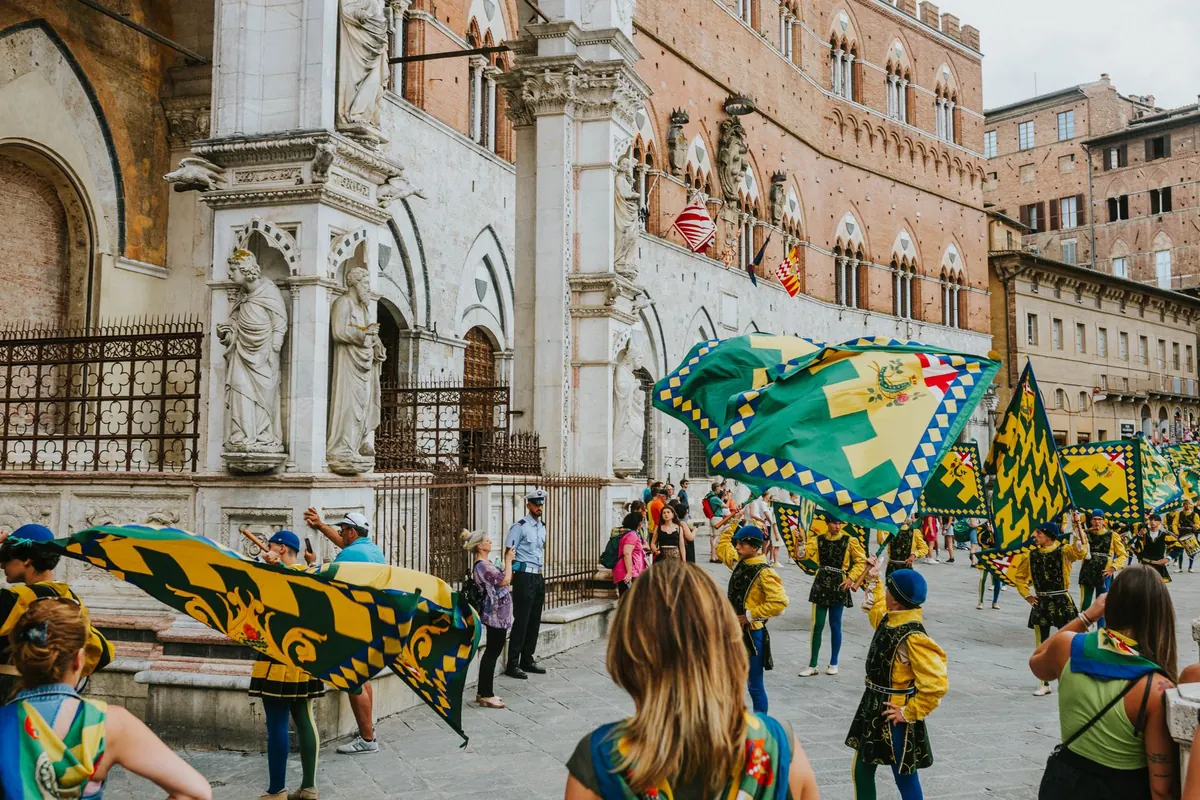
Two dates are worth marking. The Palio di Siena is run on 2 July and 16 August, and it is not a ticketed event in any ordinary sense — the race lasts barely a minute, the ritual around it lasts all day, and the contrade take the whole thing very seriously. Watch from the edges of the Campo if you are in the city, and arrive early.
New-season Serie A fixtures are usually published in late June or July, which is the moment to plan autumn trips. Pre-season friendlies fill the mountain towns of Trentino and Alto Adige, often with cheap or free entry, and they are a pleasant way to see a big club in a small stadium.
Autumn: A New Season and the Classics
Serie A restarts in late August. September brings the Italian Grand Prix at Monza, the fastest weekend on the Formula 1 calendar, alongside MotoGP at Misano and the opening rounds of the volleyball and basketball seasons. October is the outdoor month: the Venice Marathon, the Barcolana in Trieste on the second Sunday, when thousands of boats share the gulf, and Il Lombardia, the last cycling Monument of the year, run over the hills above Lake Como.
November belongs to indoor sport and the tail end of the tennis year. Turin hosts the ATP Finals, which bring the top eight singles players and doubles teams to the city for a week. Italy's rugby autumn internationals also land in November, and the football calendar starts to compress as European group stages reach their decisive rounds.
Quick Reference: What Happens When
- January: Serie A midwinter rounds, Coppa Italia, Supercoppa, Cortina skiing, biathlon at Anterselva.
- February: Six Nations opens in Rome, European knockouts resume, alpine World Cup racing continues.
- March: Strade Bianche, Tirreno-Adriatico, Milan–Sanremo, Rome Marathon, Six Nations finale.
- April: Football run-in begins, basketball and volleyball playoffs, spring classics.
- May: Giro d'Italia starts, Coppa Italia final, Rome tennis, Imola and Mugello race weekends.
- June: Giro finale, Golden Gala athletics, Superbike at Misano, Serie A fixtures released.
- July: Palio di Siena, transfer window, pre-season friendlies in the Alps.
- August: Serie A kicks off, second Palio, MotoGP returns.
- September: Monza Grand Prix, MotoGP at Misano, volleyball and basketball begin.
- October: Venice Marathon, Barcolana, Il Lombardia.
- November: ATP Finals in Turin, rugby autumn internationals.
- December: Val Gardena speed races, holiday football rounds, winter break decisions.
How to Plan Around the Calendar
Three habits save a lot of frustration. First, confirm dates a few weeks out rather than months ahead: kick-off times, stage routes and even race weekends move, and the official league or federation site is the only source worth trusting. Second, book transport before accommodation for big events — trains to Monza, Turin or Rome fill quickly, and hotel prices near circuits and stadiums rise earlier than most people expect. Third, treat the shoulder weeks as an opportunity: early April and late June are cheap, quiet and still full of sport if you know where to look, from minor-league football to regional cycling races that cost nothing to watch.
And if you are travelling specifically for an event, build in a spare day. Italian sporting weekends have a habit of running long, and the journey home is always easier when you are not sprinting for the last train.
Photo: Bohdan Hyrovych / Pexels