Italy does not have one festival calendar. It has hundreds, stitched together by parish councils, pro loco committees, and city halls, each with its own rhythm. That is the pleasure and the problem. A trip timed around a single local festival can feel like being let into a private party. A trip timed around five of them in six days can feel like a logistics exam. The difference is rarely luck. It is planning: choosing the right anchor, verifying dates, booking the few things that sell out, and leaving enough space for the festival to actually happen.
Start with one anchor, not a wish list
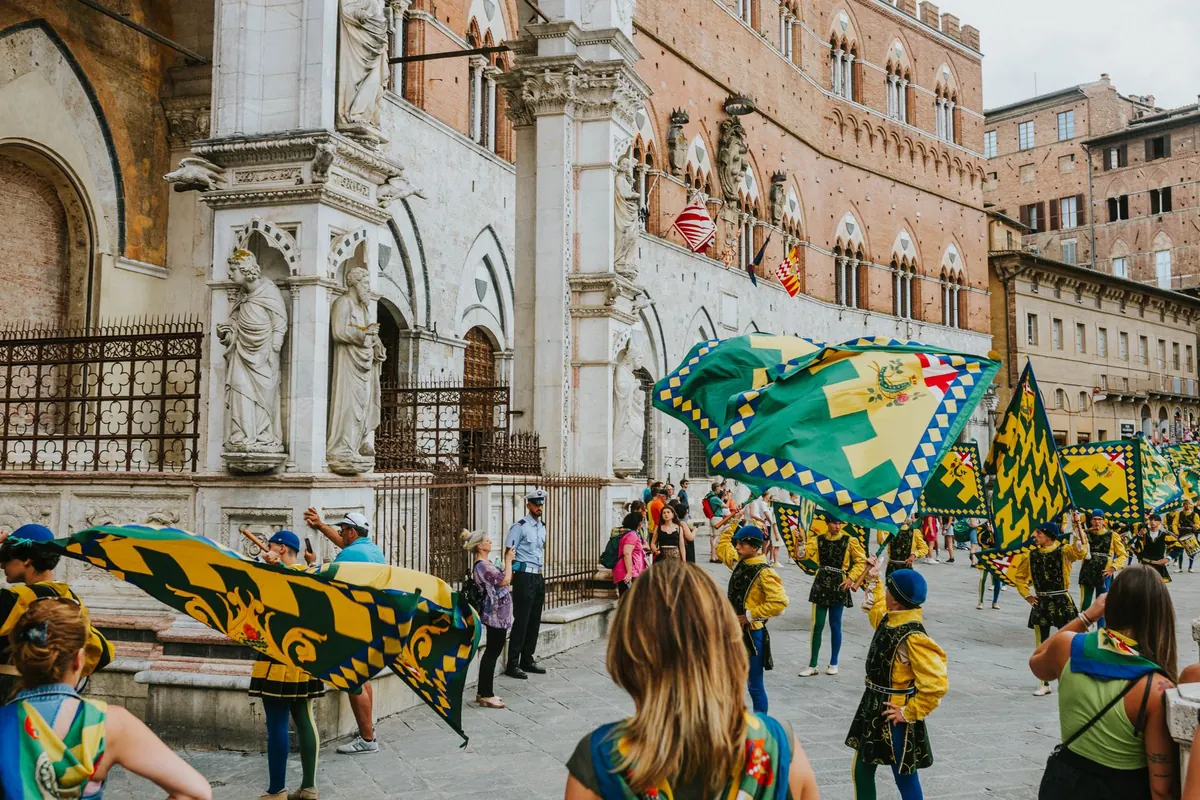
The first decision is not which cities to visit. It is which festival is worth building a trip around. Pick one event that genuinely interests you: the Palio di Siena in July or August, Venice Carnival in the weeks before Lent, the Festa di Sant’Agata in Catania in early February, the Infiorata in Spello around Corpus Christi, or the Sagra del Pesce in Camogli in May. Then draw a circle around it. Choose two or three nearby places that make sense by train or bus, and resist the urge to add a region on the other side of the country. A week in Sicily around Catania’s festival is a different trip from a week in Veneto around Carnival. Both are good. Combining them in five days is not.
Read the calendar like a local
Italian festivals fall into two broad groups: fixed dates and movable ones. The Palio di Siena is tied to July 2 and August 16. Many patron saint festivals are fixed. Carnival, Easter processions, and Corpus Christi move each year, which means the surrounding sagre and events move with them. Small food festivals often take place on a summer weekend, but the weekend changes annually. Check the official municipal website or the local pro loco page, not a travel blog from three years ago. If a date is confirmed only a few weeks ahead, plan a flexible base and keep the festival as the anchor rather than the entire itinerary. Also note rain dates and postponements: outdoor events may shift by a day, and the Palio can be postponed if the weather turns.
Build the route around transport, not ambition
Italy’s high-speed rail network is excellent between major cities, but many festivals happen in towns where the last mile is a local bus, a regional train, or a car. Spello is reachable by train, but some hill towns are not. Camogli is easy by train; a rural sagra in the hinterland may not be. Decide early whether you need a car. If you do, check the town’s parking and restricted traffic zones before you book accommodation. If you do not, check the last bus back to your base, especially on Sundays and public holidays. A festival that ends at midnight is not much fun if the only connection left is a taxi you cannot find.
The two-night rule
For any major festival, stay at least two nights in the area. One night leaves no margin for a delayed train, a missed bus, or a weather postponement. Two nights give you a slow morning, a festival afternoon, and a backup plan. For the Palio, many travelers stay in nearby towns and travel in by bus or train; for Carnival, staying within walking distance of the main events saves a lot of late-night logistics.
Book the few things that sell out
Not everything needs to be booked months ahead. But some things do. Small hotels and agriturismi near a major festival often fill early, and some require minimum stays. Book a refundable rate if you can, and read the cancellation policy before you pay. For museums and major sites, timed entry is now common in big cities; book those for the days around the festival, not on the festival day itself. If you are attending a religious procession, check whether the church or cathedral has visitor restrictions. Dress modestly, keep your voice down, and do not step into the procession to take a photo. That is not a booking issue, but it is part of planning respectfully.
Protect the festival day itself
The biggest planning mistake is treating a festival as a one-hour stop. Festivals involve waiting, crowds, local timetables, and long meals. Keep the day light. Schedule a morning walk or a small museum, then leave the afternoon and evening for the event. Check whether restaurants will be open or serving a fixed festival menu, and whether shops will close. Carry some cash for small stands, even if cards are widely accepted. If the event is religious, arrive early enough to find a respectful place to stand. If it is a food festival, go hungry but not starving; queues can be long and the best stalls sell out.
Avoid the classic itinerary clashes
Some clashes are obvious, some are not. These are the ones that ruin otherwise good trips:
- Two festivals in two regions on consecutive days. Siena’s Palio and a Venetian regatta may look close on a map. They are not close in practice once you factor in trains, transfers, and crowd delays.
- A morning train after a night procession. Book the later train, or stay another night. Festival fatigue is real.
- Ferragosto. August 15 is a public holiday. Many family-run businesses close, transport is busy, and small towns operate on holiday schedules. Plan around it rather than through it.
- Sunday transport in rural areas. Buses may run rarely or not at all. Check before you commit to a hill town.
- A museum timed entry on the same afternoon as a procession. One will be rushed. Move the museum to another day.
- Assuming a small festival is a tourist attraction. Many are local religious or community events. Go as a guest, not as an audience.
A simple planning sequence
Use this order to keep the trip manageable:
- Choose one anchor festival based on season, region, and genuine interest.
- Verify the date on the official municipal or pro loco website; note movable feasts and rain dates.
- Map a loop with no more than two bases for a week, and check the actual train and bus times.
- Book refundable lodging and any timed museum entries; check minimum-stay rules.
- Lock in high-speed trains when your dates are firm, and leave regional legs flexible.
- Build a buffer day and keep the festival day light.
- Recheck the local calendar two weeks before departure, then pack for weather and church visits.
The goal is not to control the festival. It is to remove the friction around it. When the logistics are settled, you can stand in a crowd in Siena, follow a procession in Catania, or eat standing up at a seafood sagra in Camogli and actually be there. That is the trip worth planning.